QoS & Throughput Patterns
These patterns control how fast work executes, protect downstream services from overload, and make sure no single caller or tenant dominates dispatch.
Patterns in this section
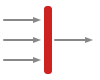
Downstream Rate Limiting
Rate-limits calls to a downstream service by routing throttled Activities to a dedicated Task Queue with a server-enforced throughput cap.
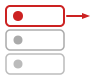
Priority
Assigns a priority level to Workflows and Activities so time-sensitive work dispatches ahead of lower-priority work on the same Task Queue.
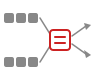
Fairness
Distributes Task dispatches across tenants or users so a burst from one caller does not starve the others.
Choosing a pattern
A downstream dependency has a fixed rate limit: use Downstream Rate Limiting to cap throughput at the Worker.
Urgent work should move ahead of bulk work: use Priority.
Multiple tenants share the same Workers: use Fairness to keep one tenant's burst from starving others.
Related sections
- Worker Configuration Patterns — the Task Queue and Worker setup these patterns route through
- Batch Processing Patterns — rate-control patterns for large record sets
- Error Handling & Retry Patterns — back off and retry when a rate limit is hit